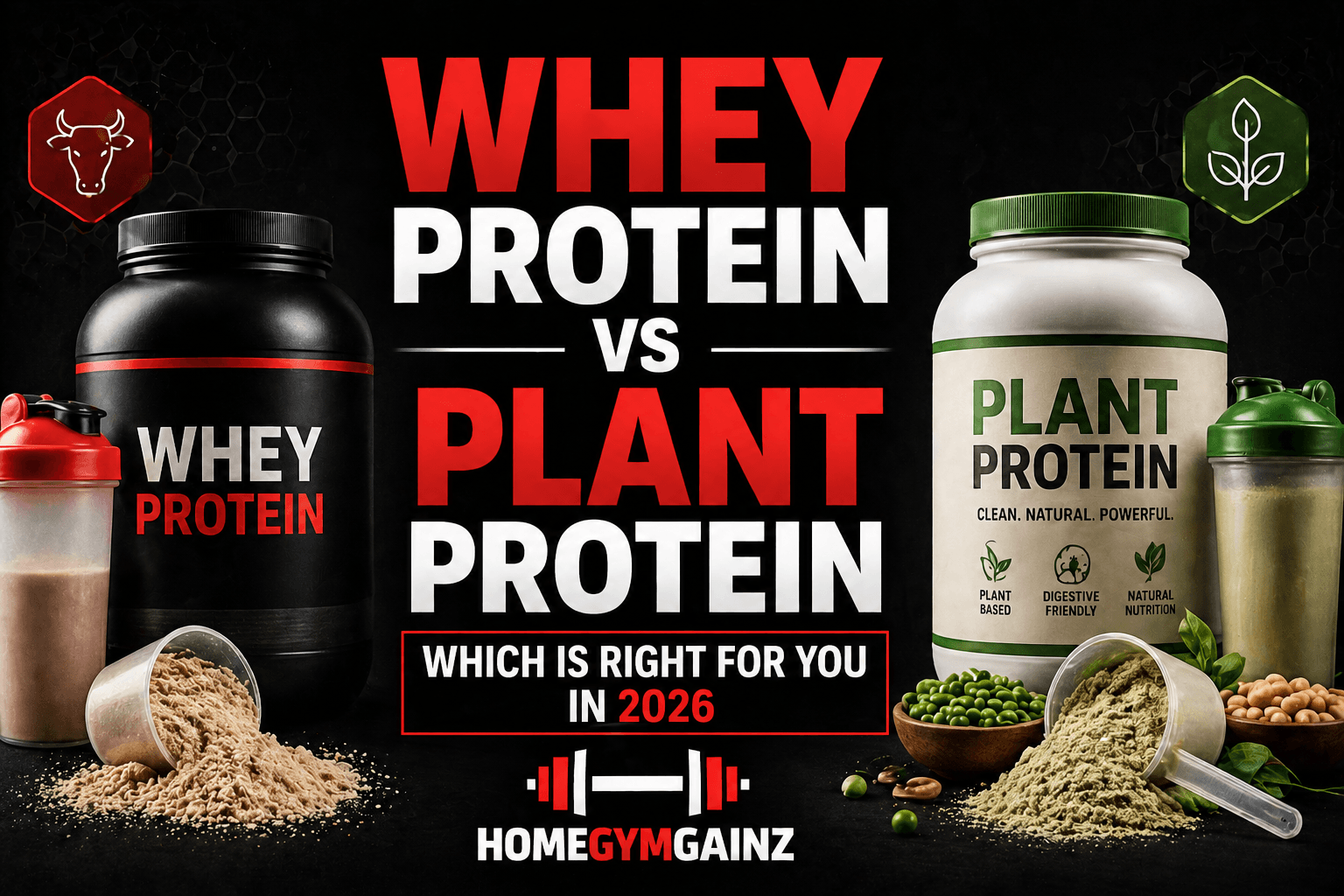
The protein supplement aisle has never been more confusing. Whey protein has dominated the market for decades — but plant-based protein powders have grown from a niche alternative into a mainstream option backed by serious research and serious athletes. The question is no longer whether plant protein works — it is which protein source is right for your specific goals, body, and lifestyle.
This guide cuts through the marketing on both sides and gives you an honest, evidence-based comparison of whey protein vs plant protein across every variable that actually matters — muscle building effectiveness, digestibility, ingredient quality, taste, price, and South African availability.
By the end of this guide you will know exactly which protein is right for you — and where to buy it locally in South Africa without paying international shipping costs.
What Is Whey Protein
Whey protein is derived from milk during the cheese-making process. When milk curdles the liquid that separates from the solid curds is whey — a complete protein containing all nine essential amino acids including the three branched-chain amino acids (leucine, isoleucine, and valine) that directly stimulate muscle protein synthesis.
Whey is the most studied protein supplement in the history of sports nutrition. Thousands of peer-reviewed studies consistently demonstrate its effectiveness for muscle building, strength improvement, and recovery acceleration. It is not an accident that whey protein became the default supplement recommendation for serious athletes — the research supporting it is overwhelming.
The three forms of whey protein:
Whey Protein Concentrate (WPC) — The most affordable form. Contains 70 to 80% protein by weight with the remaining content being lactose and fat. Slightly lower protein content per serving but retains more of the naturally occurring growth factors found in whole whey. Best for budget-conscious buyers who are not lactose sensitive.
Whey Protein Isolate (WPI) — Processed further to remove most of the lactose and fat — resulting in 90%+ protein by weight. Faster digesting, lower in calories, and appropriate for lactose-sensitive individuals. The premium choice for people in a calorie deficit or those who want the cleanest possible protein source.
Whey Protein Hydrolysate (WPH) — Pre-digested whey that absorbs the fastest of all three forms. Significantly more expensive with minimal practical advantage over isolate for most users. Primarily used in clinical settings and elite athletic contexts.
What Is Plant Protein
Plant protein powders are derived from plant sources — most commonly peas, brown rice, hemp, soy, and various combinations thereof. Unlike whey protein which comes from a single complete source, most plant proteins require blending multiple sources to achieve a complete amino acid profile.
The most common plant protein sources:
Pea Protein — Derived from yellow split peas. The most popular plant protein base due to its relatively complete amino acid profile, high digestibility compared to other plant sources, and neutral taste. High in leucine — the amino acid most directly responsible for triggering muscle protein synthesis.
Brown Rice Protein — High in cysteine and methionine but low in lysine — making it incomplete as a standalone protein. Frequently blended with pea protein to create a complementary complete amino acid profile.
Hemp Protein — Derived from hemp seeds. Contains all nine essential amino acids and a favourable omega-3 to omega-6 fatty acid ratio. Lower in leucine than pea protein and less efficiently absorbed — but provides additional nutritional benefits beyond pure protein content.
Soy Protein — The only plant protein that is naturally complete — containing all nine essential amino acids in adequate amounts. High biological value comparable to whey in research settings. Controversial due to phytoestrogen content — though the evidence for phytoestrogens causing hormonal disruption in humans at normal supplement doses is weak.
Pea and Rice Blend — The gold standard of plant protein supplementation. The combination of pea protein’s high leucine content and brown rice protein’s complementary amino acids creates a complete profile that research shows performs comparably to whey for muscle building in trained individuals.
Whey Protein vs Plant Protein — The Complete Comparison
1. Muscle Building Effectiveness
Whey protein — slight advantage
Whey protein has a higher leucine content per gram of protein than most plant sources — and leucine is the primary amino acid that triggers muscle protein synthesis. A typical 25g serving of whey protein delivers 2.5 to 3g of leucine — above the 2g threshold research identifies as the minimum required to maximally stimulate muscle protein synthesis.
A 2015 study published in the Journal of the International Society of Sports Nutrition found that whey protein produced greater acute muscle protein synthesis than rice protein at matched doses. However a 2013 study in Nutrition Journal found that rice protein isolate consumed post-training produced comparable gains in muscle mass and strength to whey protein over an 8-week resistance training programme.
Plant protein — competitive at matched doses
More recent research increasingly shows that plant proteins — particularly pea and rice blends — produce muscle building outcomes comparable to whey when protein doses are matched and overall daily protein targets are met. The key variable is leucine content — plant protein users may need to consume slightly larger doses (30 to 35g per serving vs 25g for whey) to match the leucine delivery of whey.
The honest verdict: Whey protein has a slight acute advantage in muscle protein synthesis due to its superior leucine content and absorption speed. However for most people training consistently and hitting daily protein targets through food and supplementation combined the practical difference in muscle building outcomes between whey and a quality pea-rice blend is minimal over a 12-week training period.
2. Digestibility and Absorption
Whey protein — faster absorption
Whey protein — particularly isolate — is the fastest absorbing protein source available. It reaches peak blood amino acid levels within 60 to 90 minutes of consumption making it ideal for the post-training window when muscle protein synthesis is elevated and amino acid availability is critical.
Plant protein — slower but complete
Plant proteins generally absorb more slowly than whey — reaching peak blood amino acid levels in 2 to 3 hours. This is not necessarily a disadvantage — slower digestion produces more sustained amino acid availability and may be preferable for meal replacement use or pre-sleep consumption.
Digestive tolerance — plant protein advantage for lactose-sensitive individuals
Whey concentrate contains lactose — which causes digestive discomfort (bloating, cramping, gas) in lactose-intolerant individuals. This affects a significant percentage of South Africans — particularly those of African descent who have higher rates of lactose intolerance than European populations.
Whey isolate removes most lactose and is typically well-tolerated even by mildly lactose-sensitive individuals. However for people with significant lactose intolerance or dairy allergy plant protein is the clearly superior choice regardless of the muscle building comparison.
The honest verdict: Whey protein wins on absorption speed. Plant protein wins on digestive tolerance for lactose-sensitive individuals. Whey isolate is the middle-ground solution for people who want whey’s absorption advantages without lactose-related digestive issues.
3. Amino Acid Profile
Whey protein — complete and optimal
Whey protein is a complete protein containing all nine essential amino acids in amounts that exceed the minimum requirements for each. Its BCAA content — particularly leucine — is among the highest of any protein source making it the most effective single-ingredient protein for muscle building.
Plant protein — complete when blended, incomplete when standalone
Most individual plant proteins are incomplete — lacking adequate amounts of one or more essential amino acids. Pea protein is low in methionine. Rice protein is low in lysine. Hemp protein is low in leucine.
However a quality pea and rice protein blend achieves a complete and adequate amino acid profile that research shows performs comparably to whey for trained athletes consuming adequate total daily protein.
The key rule for plant protein users: Always choose a blended plant protein — pea and rice combination — rather than a single-source plant protein. Single-source plant proteins are incomplete and should not be your primary protein supplement.
The honest verdict: Whey protein wins on amino acid profile as a standalone ingredient. A quality pea-rice blend is competitive. Single-source plant proteins are not adequate as a primary protein supplement.
4. Calorie and Macronutrient Profile
| Per 30g Serving | Whey Concentrate | Whey Isolate | Pea-Rice Blend |
|---|---|---|---|
| Protein | 22–24g | 26–28g | 22–25g |
| Carbohydrates | 3–5g | 1–2g | 3–6g |
| Fat | 2–4g | 0.5–1g | 2–4g |
| Calories | 120–140 | 100–120 | 110–130 |
| Lactose | Present | Minimal | None |
For fat loss: Whey isolate wins — lowest calorie, highest protein per serving.
For muscle building: Whey concentrate or pea-rice blend — both provide adequate protein with slightly more carbohydrates to support training energy.
For a calorie-controlled diet: Whey isolate or a lean pea-rice blend are both appropriate.
5. Taste and Mixability
Whey protein — generally superior
Whey protein has been refined over decades of consumer feedback. Modern whey proteins — particularly from quality brands — mix easily in water or milk, produce a smooth texture, and come in a wide variety of well-developed flavours. Chocolate and vanilla whey proteins from established brands are genuinely pleasant tasting.
Plant protein — improved significantly but still behind
Early plant proteins were notoriously gritty, chalky, and difficult to flavour palatably. Modern pea-rice blends have improved dramatically — but they remain slightly grittier and earthier tasting than whey. Mixing plant protein with plant-based milk rather than water significantly improves the texture and flavour.
The honest verdict: Whey protein wins on taste and mixability. Plant protein has improved significantly but remains second to whey in this category for most users. If taste is a priority choose whey. If you have tried multiple plant proteins and found them unpleasant try mixing with oat milk or almond milk before abandoning plant protein entirely.
6. Price Comparison — South Africa 2026
This is where the comparison becomes most relevant for South African buyers. Both whey and plant protein are available locally through Faithful to Nature — eliminating international shipping costs and currency conversion uncertainty.
| Type | Local Price (Faithful to Nature) | International (HerbsPro) |
|---|---|---|
| Whey Concentrate | R350–R600 per kg | $25–$40 per kg |
| Whey Isolate | R500–R900 per kg | $35–$60 per kg |
| Pea-Rice Blend | R400–R700 per kg | $30–$50 per kg |
| Soy Protein | R300–R500 per kg | $20–$35 per kg |
Price verdict: Whey concentrate is typically the most affordable option locally. Plant protein and whey isolate are similarly priced. Buying locally from Faithful to Nature eliminates import duties and shipping costs making local pricing more competitive than the international prices suggest.
7. Environmental and Ethical Considerations
This comparison would be incomplete without acknowledging that many people choose plant protein for reasons beyond performance.
Plant protein — significant environmental advantage
Plant protein production requires significantly less water, less land, and produces significantly fewer greenhouse gas emissions than dairy farming. If environmental impact is a consideration in your purchasing decisions plant protein is the clearly preferable choice.
Whey protein — ethical considerations for vegans and dairy-free consumers
Whey is derived from dairy — making it incompatible with vegan diets and unsuitable for people with dairy allergies. For these consumers plant protein is not a performance compromise — it is the only appropriate choice.
Who Should Choose Whey Protein
Choose whey protein if:
- Your primary goal is maximising muscle building and you want the protein source with the strongest acute muscle protein synthesis response
- You are not lactose intolerant or dairy sensitive
- You train in a fasted state or immediately post-training and want fast-absorbing protein
- You prefer better taste and mixability
- You are on a tight budget and want the most protein per rand spent — whey concentrate is typically the most affordable option
Best whey protein options available in South Africa:
🇿🇦 SA Local — Faithful to Nature: 👉 View Whey Protein at Faithful to Nature → 👉 View Whey Isolate at Faithful to Nature →
🌍 International — HerbsPro: 👉 View Whey Protein at HerbsPro →
Who Should Choose Plant Protein
Choose plant protein if:
- You follow a vegan or plant-based diet
- You are lactose intolerant or have a dairy sensitivity or allergy
- You prioritise environmental sustainability in your purchasing decisions
- You train later in the day and prefer slower-digesting protein that provides sustained amino acid availability
- You want to diversify your protein sources beyond dairy
The most important rule for plant protein: Always choose a pea and rice protein blend — not a single source plant protein. The blend provides a complete amino acid profile that single-source plant proteins cannot match.
Best plant protein options available in South Africa:
🇿🇦 SA Local — Faithful to Nature: 👉 View Plant Protein at Faithful to Nature → 👉 View Pea Protein at Faithful to Nature →
🌍 International — HerbsPro: 👉 View Plant Protein at HerbsPro →
The Hybrid Approach — Best of Both Worlds
For people who are not vegan and not lactose intolerant the most effective approach is not choosing one over the other — it is using both strategically:
Post-training: Whey protein isolate — fastest absorption, highest leucine, maximises the post-training muscle protein synthesis window
Before sleep: Plant protein or casein — slower digestion provides sustained amino acid availability throughout the night when muscle repair is most active
Meal replacement: Plant protein — lower calorie density, higher fibre content, more satiating for extended periods
This approach leverages the specific advantages of each protein type at the moment when those advantages matter most.
How Much Protein Do You Actually Need
Regardless of whether you choose whey or plant protein the total daily protein target is the same:
For muscle building: 1.6 to 2g per kilogram of body weight daily For fat loss: 2 to 2.4g per kilogram of body weight daily For maintenance: 1.2 to 1.6g per kilogram of body weight daily
Practical examples:
- 60kg woman building muscle — 96 to 120g of protein daily
- 80kg man building muscle — 128 to 160g of protein daily
- 70kg person losing fat — 140 to 168g of protein daily
Most people significantly underestimate how difficult it is to hit these targets through food alone — which is why protein supplementation is the most widely recommended and most evidence-supported supplement category in sports nutrition.
Reading Protein Labels — What to Look For and What to Avoid
Whether you choose whey or plant protein knowing how to read a protein label prevents you from buying inferior products.
Look for:
- Protein content per serving above 20g — anything lower is poor value
- Short ingredient list — the fewer ingredients the better
- Named protein source first on the ingredient list — “whey protein isolate” or “pea protein” not “protein blend” as the first ingredient
- Independent third-party testing certification — NSF Certified for Sport or Informed Sport logos indicate the product has been tested for banned substances and label accuracy
Avoid:
- Amino spiking — products that use cheap amino acids like glycine, taurine, or creatine to inflate the nitrogen content and appear higher in protein than they actually are. Check if the amino acid profile lists individual aminos as separate ingredients — a red flag for spiking.
- Excessive artificial sweeteners — some people experience digestive discomfort from high doses of sucralose or acesulfame potassium
- Proprietary blends — products that list a “proprietary blend” without specifying individual ingredient amounts — you cannot verify whether effective doses of key ingredients are present
- Very low price per serving — quality protein costs money to manufacture. Products priced significantly below market rate typically compromise on ingredient quality or use amino spiking
Protein Timing — Does It Matter
The post-training protein window — the idea that you must consume protein within 30 minutes of finishing training or your session is wasted — has been significantly overstated in gym culture.
What the research actually shows:
A 2013 meta-analysis published in the Journal of the International Society of Sports Nutrition found that the post-training window is less critical than total daily protein intake. If you hit your daily protein target consistently the specific timing of individual protein doses has minimal impact on muscle building outcomes.
The practical recommendation:
Consume protein within 2 hours of training — not necessarily within 30 minutes. This is achievable for most people through a post-training meal or shake without the anxiety of rushing to consume protein immediately after every session.
Where timing does matter:
Pre-sleep protein consumption — 30 to 40g of slower-digesting protein (casein, plant protein, or cottage cheese) consumed before sleep has consistently shown benefits for overnight muscle protein synthesis and recovery in research. This is the one timing window where the evidence for strategic protein timing is strongest.
Frequently Asked Questions
Can women take whey protein? Yes — whey protein is equally effective for women as for men. It will not cause women to bulk up — building significant muscle mass requires years of heavy training and a consistent calorie surplus far beyond what most women pursue. Whey protein helps women hit their daily protein target, preserve muscle during fat loss, and recover faster from training.
Is plant protein less effective than whey for building muscle? At matched protein doses and adequate leucine intake the research shows comparable muscle building outcomes between quality pea-rice blends and whey protein for trained individuals. Whey has a slight acute advantage in muscle protein synthesis due to faster absorption and higher leucine content — but this advantage diminishes over longer training periods when total daily protein intake is adequate.
Can I mix whey and plant protein together? Yes — combining them in the same shake is a legitimate strategy that provides fast-absorbing whey leucine alongside slower-digesting plant protein for sustained amino acid availability.
Is soy protein safe for men? The concern about soy protein causing hormonal disruption in men due to phytoestrogen content is not well-supported by the research at normal supplement doses. Multiple studies show no significant effect of soy protein supplementation on testosterone levels in healthy men consuming typical supplement amounts. The evidence against soy protein for men is largely theoretical rather than demonstrated in clinical research.
Which protein is best for weight loss? Whey protein isolate — highest protein per calorie, lowest fat and carbohydrate content. For people who are lactose sensitive or vegan a lean pea-rice blend is an equally appropriate choice for weight loss.
How do I know if my protein powder is good quality? Look for independent third-party testing certifications, named protein sources as the first ingredient, protein content above 20g per serving, and a short ingredient list. If the price seems too good to be true the protein quality is likely compromised through amino spiking or inferior ingredient sourcing.
The Final Verdict — Whey Protein vs Plant Protein
There is no universally correct answer to the whey protein vs plant protein debate — the right choice depends entirely on your individual circumstances.
Whey protein wins for:
- Maximum acute muscle protein synthesis
- Fastest absorption post-training
- Taste and mixability
- Budget per gram of protein
Plant protein wins for:
- Vegan and dairy-free diets
- Lactose intolerant individuals
- Environmental sustainability
- Sustained amino acid delivery
Both are equally appropriate for:
- Long-term muscle building when total daily protein is adequate
- Fat loss programmes
- General health and recovery support
The most important variable in any protein supplementation strategy is not which source you choose — it is whether you consistently hit your daily protein target. A plant protein you enjoy and take every day outperforms a whey protein you find unpleasant and skip. Choose the option that fits your diet, your digestion, your ethics, and your taste preferences — and take it consistently.
For a complete guide to building your supplement stack around your protein foundation visit our Gym Supplements page.
For supplement recommendations tailored to your specific BMI and body composition goals use our free BMI Calculator and visit our Body Types and Training Guide.
For workout programmes to pair with your protein supplementation visit our Workout Routines page.