Introduction
Nobody talks about this reason for going to the gym — but almost everyone thinks about it.
The fitness industry sells workout plans using aesthetics, performance, and health. What it rarely acknowledges openly is that one of the most powerful motivators for getting fit — for both men and women — is the desire to be better in the bedroom. More energetic. More confident. More capable. More desirable.
The good news is that exercise and sexual health are more deeply connected than most people realise. The science is clear, consistent, and genuinely impressive — regular physical training produces measurable improvements in sexual function, libido, testosterone levels, body confidence, and physical performance for both men and women.
This guide covers everything — the science behind exercise and sexual health, the specific exercises that produce the greatest benefit, the lifestyle factors that amplify the effect, and the supplements that support the process. Honestly, comprehensively, and without the awkwardness that causes most fitness sites to avoid the topic entirely.
The Science — How Exercise and Sexual Health Are Connected
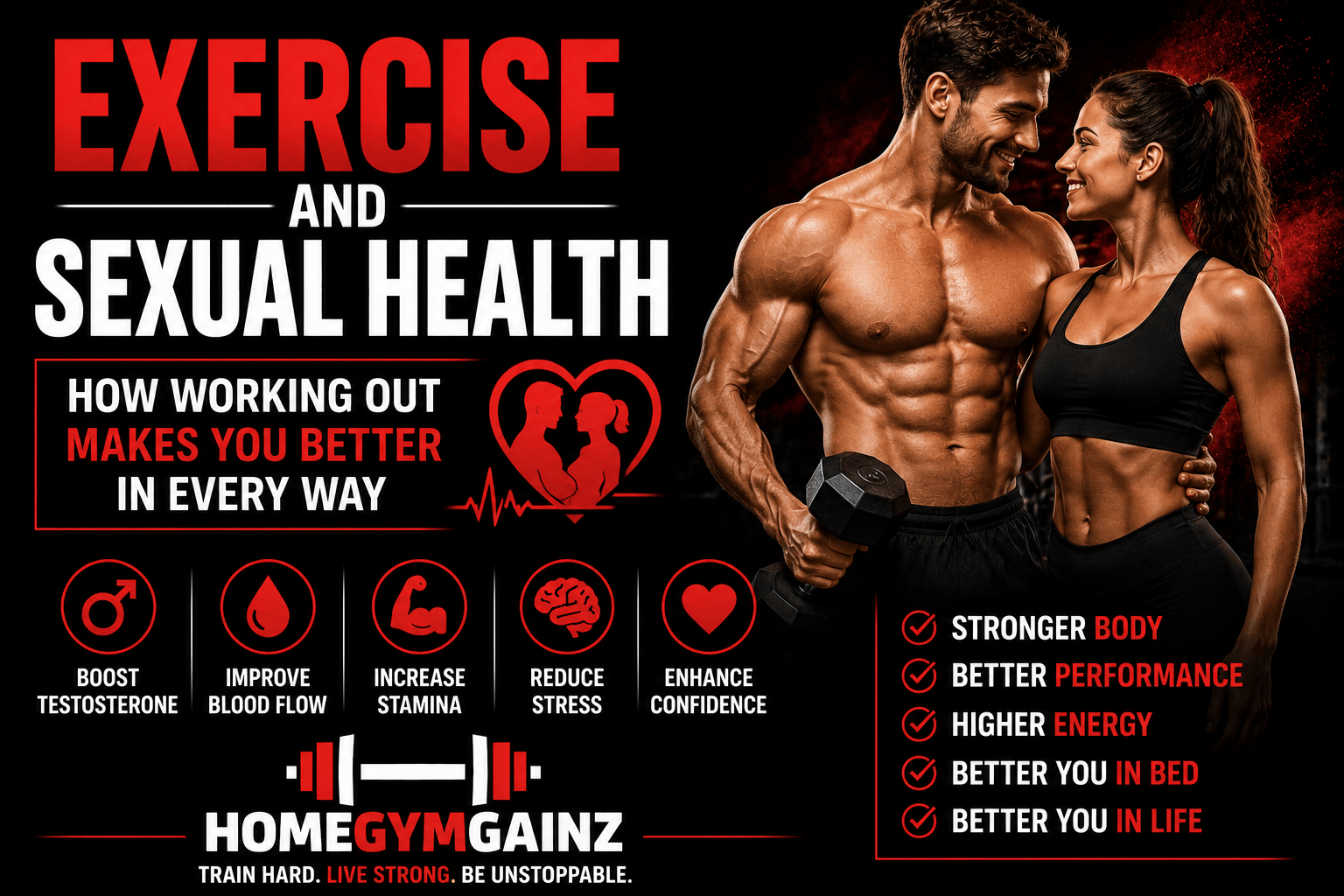
The connection between exercise and sexual health operates through five distinct biological pathways — each of which produces measurable improvements in sexual function and satisfaction.
Pathway 1 — Testosterone Production
Testosterone is the primary sex hormone in men and a critical sex hormone in women — directly regulating libido, sexual function, energy levels, mood, and body composition in both sexes.
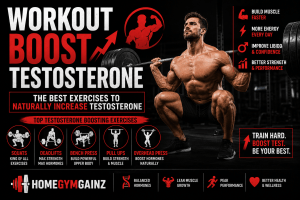
Working out to increase testosterone is one of the most well-documented effects of resistance training. Multiple studies show that heavy compound exercise — squats, deadlifts, bench press, rows — produces significant acute increases in testosterone levels lasting 15 to 30 minutes post-exercise. More importantly consistent resistance training produces chronic increases in baseline testosterone levels — raising your resting testosterone over weeks and months of regular training.
The research: A 2012 study published in the European Journal of Applied Physiology found that men who performed regular resistance training had significantly higher resting testosterone levels than sedentary men of the same age. A 2016 study found that even a single session of heavy resistance training produced a 49% acute increase in testosterone in previously untrained men.
For women: Testosterone plays an equally important role in female sexual health — regulating libido, arousal, and sexual satisfaction. Women have significantly lower testosterone levels than men but are considerably more sensitive to its effects. Regular resistance training produces measurable increases in female testosterone that directly improve sexual desire and function.
The practical implication: A consistent workout boost testosterone programme — specifically one that includes heavy compound movements — raises your baseline testosterone over time. This elevated baseline produces better libido, better sexual function, more energy, improved mood, and better body composition simultaneously.
Pathway 2 — Cardiovascular Function and Blood Flow
Sexual function in both men and women is fundamentally a cardiovascular event. Arousal, erection in men, and lubrication and engorgement in women all depend on adequate blood flow to the genitals — blood flow that is directly determined by cardiovascular health.
For men: Erectile dysfunction is now recognised as an early warning sign of cardiovascular disease — the arteries of the penis are smaller than coronary arteries and show vascular damage earlier. A 2018 meta-analysis published in the Journal of Sexual Medicine found that aerobic exercise significantly improved erectile function in men with erectile dysfunction — with greater improvements seen in men who exercised at higher intensities. The mechanism is improved vascular function — exercise makes blood vessels more elastic, lowers resting blood pressure, and improves the endothelial function required for adequate blood flow.
For women: Cardiovascular fitness directly improves genital blood flow in women — enhancing arousal, lubrication, and physical sensitivity. Research published in the Journal of Sexual Medicine found that women with higher cardiovascular fitness reported significantly better sexual function across all measured domains.
The practical implication: Both resistance training and cardiovascular exercise improve the vascular health that underpins sexual function. Skipping rope, cycling, and rowing — all available for home gym training — are among the most accessible cardiovascular improvements you can make for sexual health specifically.
👉 View Heavy Weighted Jump Rope on Mr Price Sport→ 👉 View Heavy Weighted Jump Rope on Shein →
Pathway 3 — Body Confidence and Self-Image
This pathway is rarely discussed in clinical research but is arguably the most practically significant connection between exercise and sexual health — particularly for people who have struggled with body confidence.
Body image dissatisfaction is one of the leading causes of reduced sexual desire and avoidance of sexual intimacy in both men and women. Research consistently shows that people with negative body image report lower sexual desire, less frequent sexual activity, less satisfaction during sex, and greater sexual anxiety.
Exercise improves body image through multiple mechanisms — not just aesthetic changes but through the psychological experience of becoming physically capable. The confidence that comes from lifting heavier weights than you could last month, running faster than you could last year, or completing a workout that previously felt impossible — this functional confidence transfers directly to body confidence and sexual self-assurance.
The research: A 2013 study published in the Journal of Health Psychology found that exercise improved body image and sexual self-concept in women regardless of whether it produced measurable weight loss. The psychological benefits of exercise on body confidence appear independent of physical changes — meaning the act of training consistently improves how you feel about your body even before significant aesthetic changes occur.
Pathway 4 — Energy Levels and Stamina
One of the most commonly cited reasons for reduced sexual frequency in relationships is fatigue — simply not having the energy at the end of the day. Exercise directly addresses this through multiple mechanisms.
Regular training improves mitochondrial density — the energy-producing organelles in your cells. More mitochondria means more efficient energy production throughout the day — leaving more energy available for everything including sexual activity.
Exercise also improves sleep quality — which is the primary determinant of daily energy levels. People who exercise regularly fall asleep faster, spend more time in deep sleep, and wake more refreshed than sedentary people. This sleep quality improvement alone produces significant increases in daily energy and sexual desire.
The cardiovascular connection: Sexual activity has an energy cost equivalent to moderate cardiovascular exercise — approximately 3 to 5 METs (metabolic equivalents) for most sexual activity. Better cardiovascular fitness means this energy cost represents a smaller percentage of your total capacity — reducing breathlessness and fatigue during sex and increasing the duration of comfortable activity.
Pathway 5 — Stress Reduction and Mental Health
Chronic stress is one of the most potent libido killers in both men and women. The stress hormone cortisol directly suppresses testosterone production — the more chronically stressed you are the lower your testosterone and the lower your libido.
Exercise is the most effective evidence-based stress reduction intervention available. A single session of moderate intensity exercise produces measurable reductions in cortisol lasting 2 to 4 hours post-exercise. Regular training produces chronic reductions in baseline cortisol — lowering your resting stress level and creating a more favourable hormonal environment for sexual health.
Exercise also produces endorphins — the neurotransmitters responsible for the post-exercise euphoria that regular trainers experience. These same neurotransmitters are released during sexual activity — meaning regular exercise essentially primes your brain’s reward system for sexual pleasure.
The Best Gym Exercises for Sexual Health
Not all exercises are equally beneficial for exercise and sexual health. Here are the specific movements that produce the greatest improvements across all five biological pathways:
1. Barbell Squat or Goblet Squat — The Testosterone King
The barbell back squat produces the largest acute testosterone response of any single exercise — engaging the largest muscle groups in the body simultaneously and creating the hormonal stimulus that elevates testosterone for hours post-exercise.
Research specifically examining the workout boost testosterone effect of squats shows it produces greater testosterone increases than any isolation exercise and greater than most other compound movements.
How to perform: Hold a dumbbell or kettlebell at your chest (goblet squat) or a barbell across your upper traps (back squat). Feet shoulder width apart toes out. Sit your hips back and down until your thighs are parallel to the floor. Drive through your heels to stand. Squeeze your glutes at the top.
For sexual health specifically: The glute activation of deep squats directly strengthens the pelvic floor muscles — the muscles responsible for orgasm intensity and ejaculatory control in men.
Buy Locally In SA
👉 View Adjustable Dumbbell Set on Mr Price Sport→ 👉 View Cast Iron Kettlebell on Mr Price Sport→
Buy Internationally
👉 View Adjustable Dumbbell Set on Shein → 👉 View Amazon Basics Cast Iron Kettlebell on Amazon →
2. Deadlift — Full Body Hormonal Stimulus
The conventional deadlift produces the second largest testosterone response of any exercise — engaging the hamstrings, glutes, lower back, upper back, and grip simultaneously. For working out to increase testosterone the deadlift is second only to the squat in hormonal impact.
Beyond testosterone the deadlift develops the posterior chain strength — glutes, hamstrings, lower back — that directly supports physical endurance and power during sexual activity.
How to perform: Stand with the bar over your mid-foot. Hinge at the hips and grip the bar. Drive through the floor — pushing your legs down while pulling the bar into your body. Stand tall at the top. Lower with control.
Dumbbell alternative: Romanian deadlift with the heaviest dumbbells available — same hip hinge pattern and posterior chain development.
3. Hip Thrust — Direct Glute and Pelvic Floor Development
The hip thrust produces the highest glute activation of any exercise and directly develops the muscles most involved in sexual movement patterns. The hip extension movement of the hip thrust is biomechanically identical to the primary movement pattern of sexual activity — making it the most directly applicable exercise for sexual performance improvement.
Research on pelvic floor strength consistently shows that stronger glutes and pelvic floor muscles correlate with greater orgasm intensity and better sexual function in both men and women.
How to perform: Sit with your upper back against a bench. Place a dumbbell across your hips for resistance. Drive your hips up by squeezing your glutes until your body forms a straight line from knees to shoulders. Hold 2 seconds at the top squeezing as hard as possible. Lower with control.
👉 Shop Dumbbells at Mr Price Sport → 👉 View Adjustable Dumbbell Set on Shein →
4. Skipping Rope — Cardiovascular and Stamina
Skipping rope is the most accessible cardiovascular exercise for home gym training and one of the most effective for the cardiovascular health that underpins sexual function. A 20-minute skipping session at moderate intensity replicates the cardiovascular demand of sexual activity many times over — building the stamina and vascular health that directly improve sexual performance.
For men specifically: The cardiovascular improvements from regular skipping directly reduce the risk of erectile dysfunction by improving vascular function and blood flow to the genitals.
For women specifically: Improved cardiovascular fitness from skipping enhances genital blood flow during arousal — improving physical sensitivity and lubrication.
👉 View Heavy Weighted Jump Rope on Mr Price Sport→ 👉 View Heavy Weighted Jump Rope on Shein →
5. Core Training — Stability and Endurance
Core strength and stability directly influence sexual performance by supporting the spine and pelvis during physical activity. Weak core muscles produce lower back fatigue and discomfort that limits sexual endurance — regardless of how fit the rest of your body is.
The most effective core exercises for sexual health:
Plank — Develops the deep core stability that supports the spine during physical activity. Hold for 30 to 60 seconds, 3 sets.
Ab roller — Develops the entire anterior core through a full range of motion. 3 sets of 10 reps.
Dead bug — Trains deep core stability through controlled movement that directly mimics the core demand of sexual activity. 3 sets of 8 each side.
Bird dog — Develops the posterior core stability of the lower back and glutes. 3 sets of 10 each side.
Buy Locally In SA
👉 View Ab Roller on Mr Price Sport→
Buy Internationally
Gym mat for floor work 👉View on Mr Price Sport→ or View on Shein→
6. Push-Up and Bench Press — Upper Body Strength and Endurance
Upper body pressing strength and endurance directly influences sexual performance — the ability to support body weight through the arms during sustained physical activity requires chest, shoulder, and tricep strength that most sedentary people lack.
Regular push-up and dumbbell press training develops this upper body endurance while simultaneously improving body confidence through visible chest and shoulder development.
How to perform: Standard push-ups 3 sets to failure, or dumbbell floor press 3 sets of 10 to 12 reps with challenging weight.
7. Resistance Band Work — Flexibility and Hip Mobility
Hip mobility directly influences comfort and range of motion during sexual activity. Tight hip flexors — the primary consequence of extended sitting — restrict hip extension and rotation, limiting movement comfort and physical capability.
Resistance band hip flexor stretches, hip circles, and lateral band walks develop the hip mobility and flexibility that makes physical activity — sexual and otherwise — more comfortable and more capable.
Hip flexor stretch with band: Anchor a resistance band at floor level. Loop it around your hip. Step forward into a lunge position — the band pulls your hip into extension. Hold 30 seconds each side.
Resistance band set (3 bands) 👉View on Mr Price Sport→ or View on Shein →
The Best Workout Boost Testosterone Programme for Sexual Health
This specific programme is designed to maximise the testosterone-boosting and sexual health benefits of resistance training. Perform 3 times per week on non-consecutive days.
The Sexual Health Workout Programme
Warm-up — 5 minutes: Light skipping, hip circles, bodyweight squats, band pull-aparts
Session A — Lower Body and Core Focus:
| Exercise | Sets | Reps | Rest |
|---|---|---|---|
| Goblet Squat | 4 | 8–10 | 2 min |
| Romanian Deadlift | 4 | 8–10 | 2 min |
| Hip Thrust | 3 | 12–15 | 90 sec |
| Bulgarian Split Squat | 3 | 10 each | 90 sec |
| Plank | 3 | 45 sec | 60 sec |
| Ab Roller | 3 | 10 | 60 sec |
Session B — Upper Body and Cardiovascular:
| Exercise | Sets | Reps | Rest |
|---|---|---|---|
| Dumbbell Floor Press | 4 | 8–10 | 2 min |
| Dumbbell Row | 4 | 8–10 | 2 min |
| Overhead Press | 3 | 10–12 | 90 sec |
| Pull-Up or Band Row | 3 | Max/15 | 90 sec |
| Skipping Rope Intervals | 5 | 45 sec on/15 off | — |
| Dead Bug | 3 | 8 each | 60 sec |
Session C — Full Body Circuit:
| Exercise | Sets | Reps | Rest |
|---|---|---|---|
| Jump Squat | 3 | 15 | 60 sec |
| Push-Up | 3 | Max | 60 sec |
| Hip Thrust | 3 | 15 | 75 sec |
| Skipping Rope | 3 | 60 sec | 45 sec |
| Bird Dog | 3 | 10 each | 45 sec |
| Lateral Band Walk | 3 | 15 each | 45 sec |
Exercise and Sexual Health for Men — Specific Benefits
Erectile function: Regular aerobic exercise is one of the most effective non-pharmaceutical interventions for erectile dysfunction. A 2018 review of 10 randomised controlled trials found that aerobic exercise significantly improved erectile function — with greater benefits in men who exercised more intensely. The mechanism is improved cardiovascular health and increased nitric oxide production — the molecule responsible for the vasodilation required for erection.
Testosterone levels: Working out to increase testosterone is most effective through heavy compound resistance training. Squats, deadlifts, and rows produce the greatest acute and chronic testosterone increases. Men who train consistently with heavy compound movements maintain significantly higher testosterone levels than sedentary men — an advantage that grows more significant with age as natural testosterone decline accelerates from the mid-30s onward.
Confidence and body image: The confidence that comes from a developed, capable physique directly influences sexual confidence and performance. Research consistently shows that men with higher physical fitness report greater sexual confidence, more frequent sexual activity, and higher sexual satisfaction.
Stamina and endurance: Cardiovascular fitness directly determines sexual stamina. Men with better cardiovascular fitness report significantly greater endurance during sexual activity — less breathlessness, less fatigue, and greater physical capability throughout.
Exercise and Sexual Health for Women — Specific Benefits
Libido and arousal: Exercise and sex drive in women are directly connected through multiple hormonal pathways. Regular training increases testosterone — the primary libido hormone in women — while simultaneously reducing cortisol which suppresses sexual desire. Research shows women who exercise regularly report significantly higher sexual desire than sedentary women.
Physical sensitivity: Cardiovascular fitness improves genital blood flow which directly enhances physical sensitivity and arousal response in women. Regular exercise makes the physiological arousal process faster, more reliable, and more intense.
Pelvic floor strength: Resistance training — particularly squats, deadlifts, and hip thrusts — strengthens the pelvic floor muscles that control orgasm intensity and bladder function. Women with stronger pelvic floors consistently report more intense orgasms and better sexual satisfaction.
Body confidence: Body image dissatisfaction is a leading cause of reduced sexual desire and avoidance of sexual intimacy in women. Regular exercise improves body image — not just through aesthetic changes but through the psychological experience of becoming physically capable. This confidence improvement occurs independently of weight loss or visible body changes.
Hormonal balance: Regular exercise improves hormonal balance in women — reducing cortisol, improving insulin sensitivity, and supporting healthy oestrogen metabolism. All of these hormonal improvements positively influence sexual desire, mood, and physical wellbeing.
What Happens to Sexual Health When You Overtrain
An important and often overlooked aspect of exercise and sexual health is that too much training without adequate recovery can temporarily reduce libido and sexual function — the opposite of the desired effect.
Overtraining syndrome — characterised by excessive training volume without sufficient recovery — produces chronically elevated cortisol, reduced testosterone, disrupted sleep, and suppressed immune function. All of these directly impair sexual health.
Signs that overtraining is affecting your sexual health:
- Reduced libido despite regular training
- Persistent fatigue that does not improve with rest
- Reduced training performance over consecutive weeks
- Mood disturbances — irritability, anxiety, or low mood
- Disrupted sleep despite physical exhaustion
The solution: Reduce training volume, prioritise sleep, increase calorie and protein intake, and take a deload week. Libido typically returns within 1 to 2 weeks of adequate recovery.
This is why the programme in this article trains 3 days per week — sufficient stimulus for all the sexual health benefits of exercise without the overtraining risk that higher frequencies carry for most people.
Lifestyle Factors That Amplify Exercise and Sexual Health Benefits
Exercise is the foundation — but these lifestyle factors amplify the sexual health benefits significantly:
Sleep — 7 to 9 hours per night: The majority of daily testosterone production occurs during sleep — specifically during REM sleep. Men who sleep less than 5 hours per night have testosterone levels equivalent to men 10 to 15 years older. Women who sleep poorly report significantly lower sexual desire and more frequent sexual dysfunction. Sleep is not optional for sexual health.
Alcohol reduction: Alcohol suppresses testosterone production for up to 48 hours after consumption and directly impairs sexual function through its depressant effect on the central nervous system. Reducing alcohol intake — particularly in the days before anticipated sexual activity — produces measurable improvements in sexual function.
Stress management: Chronic stress elevates cortisol which suppresses testosterone. Exercise is the most effective stress reduction tool available — but complementing it with other stress management practices (adequate sleep, social connection, time in nature) amplifies the sexual health benefit.
Nutrition: A diet rich in zinc, magnesium, vitamin D, and omega-3 fatty acids directly supports testosterone production and sexual health. Foods highest in these nutrients include lean red meat, eggs, nuts, seeds, fatty fish, and leafy vegetables.
Supplements That Support Exercise and Sexual Health
Most Impactful
Zinc Zinc is the single most important micronutrient for testosterone production. Zinc deficiency directly reduces testosterone levels — and zinc deficiency is extremely common in South Africa, particularly in people who train regularly as exercise increases zinc excretion through sweat. Supplementing with 25 to 45mg of zinc daily restores testosterone to optimal levels in deficient individuals.
🇿🇦 SA Local: 👉 View Zinc at Faithful to Nature →
🌍 International: 👉 View Zinc at HerbsPro →
Magnesium Glycinate Magnesium directly supports testosterone production and sleep quality — both critical for sexual health. Research shows magnesium supplementation increases both free and total testosterone in men who train regularly. It also improves sleep depth which is where the majority of daily testosterone production occurs.
Take 200 to 400mg before bed.
🇿🇦 SA Local: 👉 View Magnesium at Faithful to Nature →
🌍 International: 👉 View Magnesium at HerbsPro →
Ashwagandha The most researched adaptogenic herb for sexual health. Multiple peer-reviewed studies show ashwagandha supplementation significantly increases testosterone in men — a 2019 study published in Medicine found an 18% increase in testosterone and a 14% increase in sperm concentration after 8 weeks of ashwagandha supplementation. It also reduces cortisol — the primary testosterone suppressor — by up to 30%.
For women ashwagandha improves sexual function, arousal, lubrication, and satisfaction — a 2015 study specifically demonstrated these benefits in women who supplemented for 8 weeks.
Take 300 to 600mg daily.
🇿🇦 SA Local: 👉 View Ashwagandha at Faithful to Nature →
🌍 International: 👉 View Ashwagandha at HerbsPro →
Omega-3 Fish Oil Omega-3 fatty acids support testosterone production, reduce inflammation, and improve cardiovascular health — all of which directly benefit exercise and sexual health. Research shows omega-3 supplementation improves erectile function in men and enhances sexual response in women through improved vascular function.
Take 1 to 2g of combined EPA and DHA daily.
🇿🇦 SA Local: 👉 View Omega-3 at Faithful to Nature →
🌍 International: 👉 View Omega-3 at HerbsPro →
Vitamin D Vitamin D functions as a hormone in the body — and vitamin D deficiency is directly associated with reduced testosterone levels in men and poor sexual function in both sexes. Despite South Africa’s abundant sunshine vitamin D deficiency is surprisingly common — particularly in people who work indoors. Supplement with 1,000 to 2,000 IU daily.
🇿🇦 SA Local: 👉 View Vitamin D at Faithful to Nature →
🌍 International: 👉 View Vitamin D at HerbsPro →
Maca Root A Peruvian root vegetable with a growing body of research supporting its benefits for libido and sexual function in both men and women. A 2010 systematic review found significant evidence for maca improving sexual dysfunction and libido. Unlike ashwagandha maca does not directly increase testosterone — its mechanism appears to be through independent pathways affecting sexual desire.
Take 1,500 to 3,000mg daily.
🇿🇦 SA Local: 👉 View Maca Root at Faithful to Nature →
🌍 International: 👉 View Maca at HerbsPro →
Creatine Monohydrate Creatine’s connection to sexual health is indirect but significant — it improves training performance which amplifies the testosterone-boosting effect of exercise. Better training sessions produce greater hormonal responses. Creatine also supports DHT production — a testosterone metabolite that is even more potent than testosterone itself in certain tissues.
🇿🇦 SA Local: 👉 View Creatine at Faithful to Nature →
🌍 International: 👉 View Creatine at Amazon Food→
Frequently Asked Questions
How long before exercise improves sexual health? Acute testosterone increases occur after a single session of heavy resistance training. Chronic improvements in libido, energy, and sexual function typically appear within 4 to 8 weeks of consistent training. Significant improvements in erectile function from cardiovascular exercise typically require 3 to 6 months of consistent aerobic training.
Is it true that sex before a workout reduces performance? The research on this topic is largely unsupportive of the traditional advice to avoid sex before competition or training. Multiple studies show no significant effect of sexual activity on subsequent athletic performance when adequate recovery time is observed. This myth persists despite limited supporting evidence.
Does working out make you more attractive? Beyond the obvious aesthetic improvements regular training produces hormonal changes that influence attractiveness signals — improved posture, increased confidence, better skin health from improved circulation, and the subtle hormonal changes that influence how others perceive and respond to you. Research shows physically fit individuals are consistently rated as more attractive by others — an effect that goes beyond purely visual assessment.
Can exercise cure erectile dysfunction? Exercise is one of the most effective evidence-based interventions for erectile dysfunction caused by cardiovascular and lifestyle factors. For erectile dysfunction caused by psychological factors exercise helps through the body confidence and stress reduction pathways. For erectile dysfunction caused by hormonal factors exercise helps through the testosterone-boosting pathway. It is not a pharmaceutical cure but it is a legitimate and evidence-supported treatment approach.
Does cardio or weights produce better sexual health benefits? Both — and the combination is superior to either alone. Resistance training produces the greatest testosterone boost and muscular development. Cardiovascular training produces the greatest improvements in vascular health and sexual stamina. The programme in this article combines both for maximum sexual health benefit.
Why does my libido decrease after very intense training sessions? Extremely intense or prolonged training temporarily elevates cortisol — which suppresses testosterone and libido. This is why the post-extreme workout libido drop is a well-documented phenomenon. It resolves within 24 to 48 hours with adequate recovery. If your libido is consistently low despite training this indicates overtraining — reduce volume and prioritise recovery.
The Connection Nobody Talks About — But Everybody Feels
Here is the honest truth that ties everything in this guide together.
The gym changes you in ways that extend far beyond the physical. The discipline of showing up consistently, the satisfaction of lifting more than you could last month, the experience of your body becoming capable of things it previously could not do — these changes produce a psychological transformation that is inseparable from sexual confidence and sexual health.
People who train consistently feel better about their bodies — not just because their bodies look better but because their bodies do more. They are stronger, more energetic, more capable, and more comfortable in their own skin. This embodied confidence is the most powerful aphrodisiac available — and no supplement, no technique, and no amount of reading replaces the direct experience of becoming physically capable through consistent training.
The science is clear. The mechanism is understood. The exercises are proven. The only variable left is whether you show up consistently enough for the benefits to accumulate.
Start today. Your sexual health is one of the best reasons anyone has ever had to get to the gym.
Your Next Steps
For a complete beginner programme to start building the physical foundation for all the benefits covered in this guide visit our Best Workout Routine for Beginners.
For the complete 4 day muscle gain programme that maximises testosterone production through heavy compound training visit our Workout Plan for Muscle Gain.
For the complete legs workout that develops the posterior chain strength most relevant to sexual health and performance visit our Legs Workout at Home.
To understand the progressive overload principle that makes every workout in this guide produce results visit our Progressive Overload Explained guide.
For the supplement stack that supports testosterone production, sleep quality, and sexual health visit our Gym Supplements page.
Use our free BMI Calculator to establish your starting body composition — the foundation of your physical transformation journey.